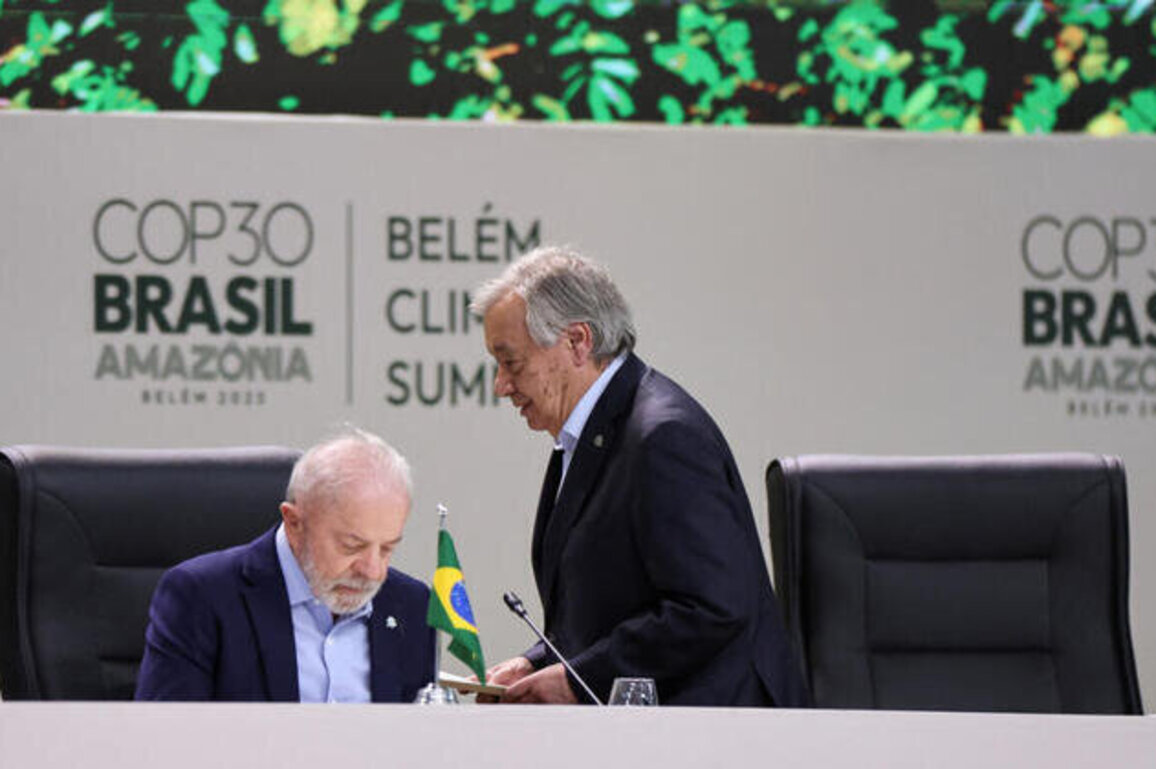
UN Secretary-General Antonio Guterres on Thursday tore into nations for their failure to limit warming to 1.5 degrees Celsius as Brazil hosted world leaders for a summit ahead of the COP30climateconference. Almost every nation is participating aside from the United States, with US President Donald Trump having branded climate science a "con job".
UN chiefAntonio Guterreson Thursday said nations must confront the "moral failure and deadly negligence" of missing the 1.5C climate target as leaders gathered in the Brazilian Amazon ahead of next week'sCOP30talks.
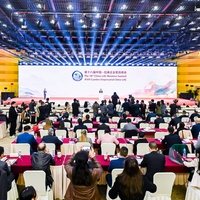
Dozens of heads of state and government are in the rainforest city of Belem in northern Brazil for the UN climate summit, which come after scientists confirmed the core goal of the Paris Agreement would be missed.
"We have failed to ensure we remain below 1.5 degrees", Guterres told the gathering of leaders in the Amazon city.
"This is moral failure and deadly negligence" but that did not mean all hope was lost, he added.
Read moreClimate change is causing millions of preventable deaths each year, report warns
Major economies are not cutting planet-warming pollution fast enough to avoid dangerous levels of global warming this century, the UN said this week, but could still speed up action to protect against the worst impacts.
The UN's weather and climate agency on Thursday said 2025 would be among the hottest years ever recorded.
Brazil hopes COP30 demonstrates thatclimate changeremains a top global priority, even as crucial targets are missed and progress falters.
In his opening address, PresidentLuiz Inacio Lula da Silvaof COP30 said the window to prevent calamitous climate change was "closing rapidly" and blasted the "extremist forces" condemning future generations.
UK Prime MinisterKeir Starmerand French PresidentEmmanuel Macronare expected in Belem but other major economies, including China and India, are sending deputies or climate ministers.
The United States is not participating, with PresidentDonald Trumpbranding climate science a "con job".
Uphill battle
The choice of Belem, a city of 1.4 million people, half of whom live in working-class neighborhoods known as favelas, has been controversial due to its limited infrastructure, with sky-high hotel fees complicating the participation of small delegations and NGOs.
Nonetheless, Karol Farias, 34, a makeup artist who came to shop at the newly spruced up Ver-o-Peso market told AFP: "The COP is bringing Belem the recognition it deserves."
The US absence will linger awkwardly during the summit, as will Brazil's recent approval of oil drilling near the mouth of the Amazon River.
So, too, will the unanswered call for a wave of ambitious new climate pledges ahead of COP30.
Brazil has acknowledged the uphill battle it faces rallying climate action at a time of wars and tariff disputes, tight budgets, and a populist backlash against green policies.
In a sobering reminder of the task at hand, a closely watched vote last month to reduce pollution from global shipping was rejected under intense pressure from the United States.
Leaders gathered in Belem "need to deliver a clear mandate to the COP to be ambitious and to close the gap and to address the issues that are burning,"GreenpeaceBrazil executive director Carolina Pasquali told AFP aboard the organization's Rainbow Warrior flagship, docked in the city.
'Enough talk'
Rather than producing a slew of new commitments, Brazil has cast the summit as an opportunity for accountability.
Brazil is launching a new rainforest conservation fund and put emphasis on adaptation, a key demand of countries which cannot afford to build defenses against climate disasters.
"This is not a charity, but a necessity," Evans Njewa, a Malawian diplomat and chair of the Least Developed Countries bloc, told AFP.
Read moreLithium: Can Bolivias new president revive the country's 'white gold dream?
These countries want concrete detail on how climate finance can be substantially boosted to $1.3 trillion a year by 2035 -- the estimated need in the developing world.
The hosts are also under pressure to marshal a response to the 1.5C failure. Even if all commitments are enacted in full, global warming is still set to reach 2.5C by century's end.
"For many of our countries, we won't be able to adapt our way out of something that overshoots over two degrees," Ilana Seid, a diplomat from Palau and chair of the Alliance of Small Island States, told AFP in October.
They, among others, want to tackle fossil fuels and push for deeper cuts to greenhouse gas emissions.
(FRANCE 24 with AFP, Reuters)
Originally published on France24