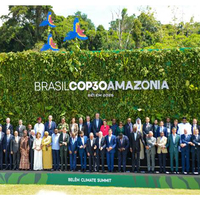
BELEM (CN) - As the United Nations Climate Change Conference kicks off Monday in the northern Brazilian city of Belem - known as the "gateway to the Amazon" - the rainforest's symbolic weight stands in contrast to the city's daily realities.
Over the weekend, as thousands of the 50,000 expected COP30 attendees began arriving, one of the busiest places in town was not the convention center or a forest reserve but a shopping mall. Inside, air conditioning provided relief from the 95 F heat outside.
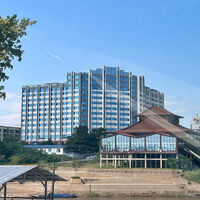
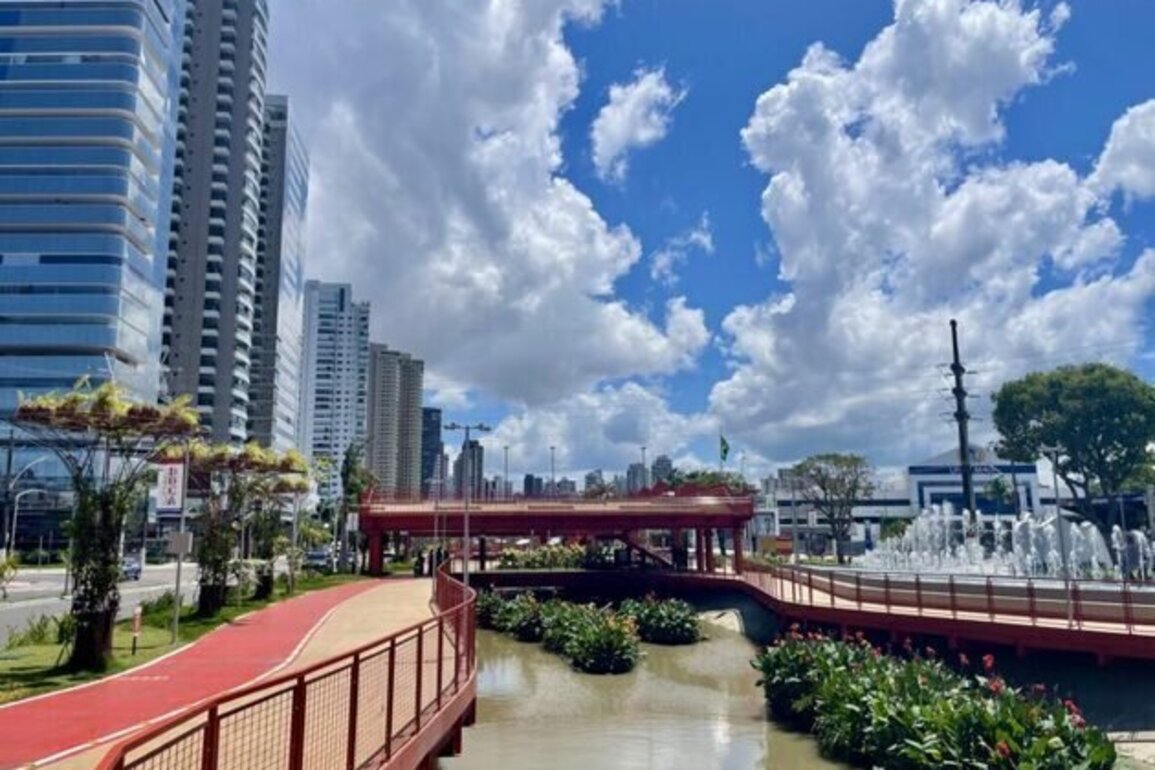
The city hosting the international summit until Nov. 21 has little shade, a lot of concrete and few trees. One of its main avenues, recently revamped for the event, is a corridor of high-rise buildings and sun-battered sidewalks.
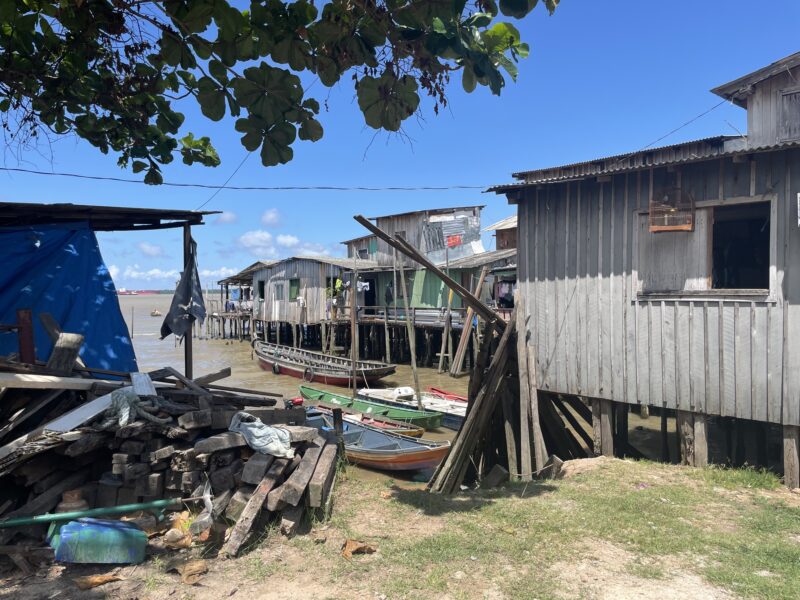
Less than a mile away, around 5,000 residents of Vila da Barca - one of the largest stilt-house settlements in the country - only recently gained access to potable water and still lack basic sanitation.
"We struggle a lot with this heat, especially without air conditioning," said Raimundo Viana Costas, 49, a lifelong resident of the community. "They talked about doing big things here because of COP30, but we haven't seen anything happen."
More than half of Belem's population - 55.8% - lives in slums or informal settlements, according to Brazil's national statistics agency. And 80.7% of residents have no access to a sewage network, according to sanitation nonprofit Instituto Trata Brasil.
On Saturday, the UN climate treaty's secretariat emailed participants asking them not to flush toilet paper at the convention center or in other locations around the city.
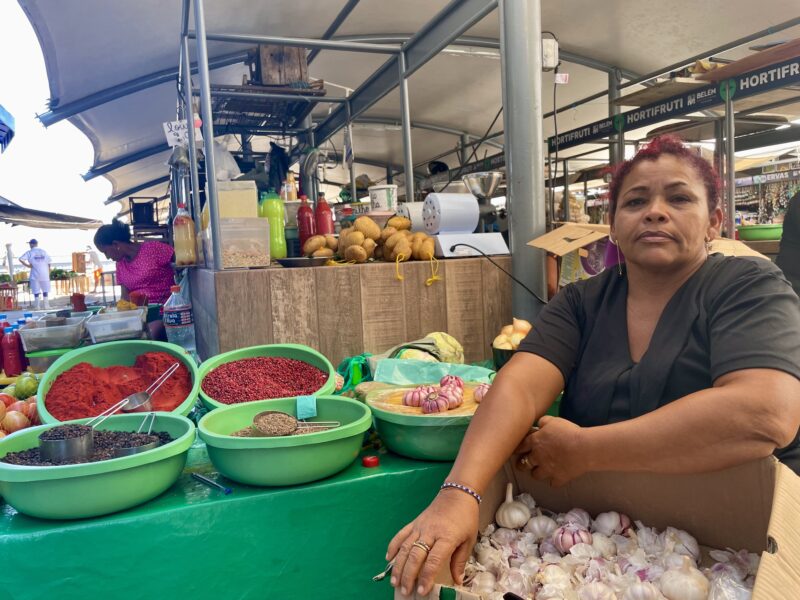
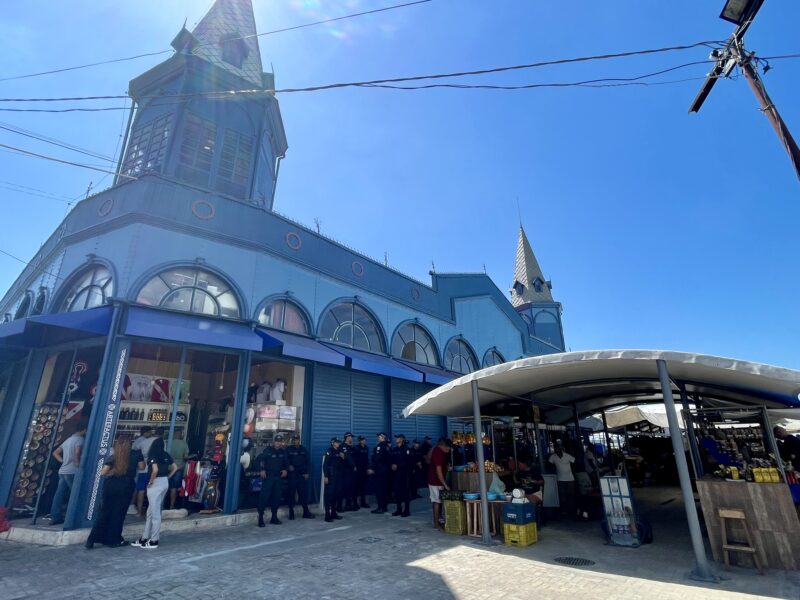
Even the city's most famous tourist attraction, the Ver-o-Peso market, which was renovated ahead of the event, is still not fully connected to a sewage system. Graciete Morais, a 49-year-old vendor at the market, said she felt excluded from the summit.
"Some people, like me, don't even know where this is going to take place," she said. "We weren't invited, but I'd like to go, just to know what's being discussed."
Olga Lcia Castreghini de Freitas, a geography professor at the Federal University of Para, said the amount of money funneled into Belem for the conference was unprecedented. She coordinates a research project on the city's urban changes and social participation in COP30.
"Everyone talks about the Amazon, but very few people have actually set foot here," she said. "It's important that people working in environmental policy come face to face with the real Amazon, not the folkloric one. Anyone willing to step outside the COP venue will have the chance to see the contradictions in this part of the territory."
These contradictions are also at the heart of Brazil's climate agenda. The conference opens at a moment when Amazon deforestation has dropped sharply, reaching its third-lowest level since 1988, according to data from the National Institute for Space Research covering August 2024 to July 2025.
At the same time, oil exploration projects threaten to undermine the country's commitment to an energy transition, such as a license granted Oct. 20 by Brazil's environmental agency for drilling near the Amazon River mouth.
"We even have a report from the International Energy Agency saying that no new oil wells can be opened if we want to keep alive the 1.5 degrees Celsius (2.7 F) goal of the Paris Agreement," said Marcio Astrini, executive secretary of Brazil's Climate Observatory.
On Oct. 22, the Climate Observatory and seven other organizations filed a lawsuit in a federal court in Para state seeking to annul the license for offshore drilling at the mouth of the Amazon River.
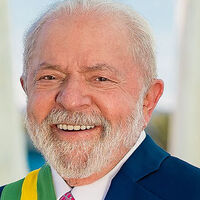
Even so, Astrini described President Luiz Inacio Lula da Silva's stance at the pre-COP30 leaders' summit, held Nov. 6-7, as "very positive."
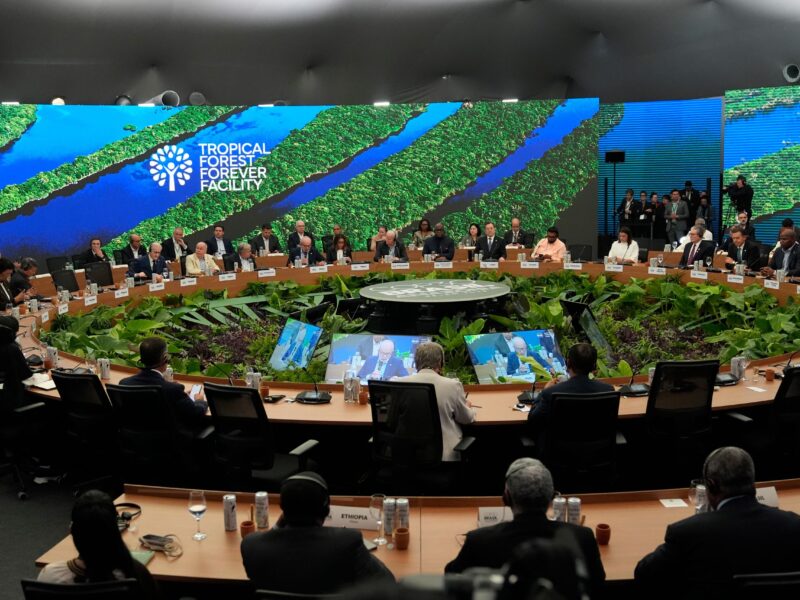
In his speech at the event, Lula said that "there is no greater symbol of the environmental cause than the Amazon rainforest" and marked the 10th anniversary of the Paris Agreement.
Under the 2015 deal, 195 parties committed to "hold the increase in the global average temperature to well below 2 degrees Celsius (3.6 F) above pre-industrial levels" and pursue efforts "to limit the temperature increase to 1.5 degrees Celsius."
"Thanks to the agreement, we moved away from projections that predicted up to 5 degrees of warming by the end of the century," Lula said. "We proved that collective mobilization brings results."
He added that although scientists have warned about the risks of climate change for more than 35 years, only in recent summits did countries officially acknowledge the need to phase out fossil fuels, stop deforestation and scale up global climate finance.
"Belem will honor the legacies of COP28 and COP29. Accelerating the energy transition and protecting nature are the most effective ways to curb global warming," he said.
COP30 comes at a time of global stagnation in climate ambition. As the conference opened, only 79 countries had submitted new Nationally Determined Contributions, or NDCs - the core mechanism of the Paris Agreement. Together, those countries account for just 64% of global emissions.
"We could have a COP where we're in the dark, without knowing what most countries are committing to," Astrini said. "It's a terrible way to start."
The conference also opens under the shadow of the United States' second withdrawal from the Paris Agreement.
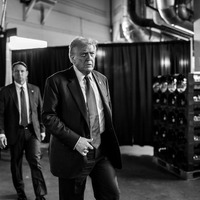
In January, President Donald Trump signed an executive order initiating the country's exit, which is set to take effect in January 2026. This time, the move was accompanied by a decision not to send a U.S. delegation to COP30.
Daniel Bodansky, a professor at Arizona State University's Sandra Day O'Connor College of Law and former climate change coordinator at the U.S. Department of State, said COP30 will be an early test of whether the Paris Agreement's ambition mechanism is functioning.
"More generally, COP30 will be an indicator as to the health of the climate change regime following the withdrawal of the United States," he said. "To what degree has the U.S. rejection of the Paris Agreement undermined the system? Or are states willing to continue to press forward?"
He added that Brazil has been an important voice on how the regime should address the forest sector. "With the at least temporary withdrawal of the United States, developing countries are likely to play an even more important role going forward," he said.
Michael Gerrard, a professor at Columbia Law School and founder of the Sabin Center for Climate Change Law, struck a more pessimistic tone. He said Trump and the Republican-led Congress are "doing everything they can to impede action on climate change, not only in the U.S. but internationally."
International climate law, Gerrard added, remains "extremely weak." "They do not even purport to enforce climate pledges," he said. "Whether a country meets its climate pledges is mostly a matter of domestic politics rather than international law or pressure."
Astrini said the conference opens in a "chaotic" context, "very different from when Brazil applied to host COP30 in 2023."
"We're facing a crisis of multilateralism because of the wars," he said. "And the last climate conference in Azerbaijan ended very badly. Countries clashed over one of the most sensitive issues: climate finance. These disagreements don't stay outside the negotiation rooms. They shape everything."
In his opening speech Monday, U.N. Climate Change Executive Secretary Simon Stiell acknowledged the challenge.
"In this arena of COP30, your job here is not to fight one another. Your job is to fight this climate crisis, together," he said. "We don't need to wait for late NDCs to slowly trickle in to spot the gap and design the innovations necessary to tackle it. Not one single nation among you can afford this."
Courthouse News reporter Marilia Marasciulo is based in Brazil.
Source: Courthouse News Service