As U.S. attention drifts from the Indo-Pacific, Taiwan and its regional partners are recalibrating alliances, opening the door to deeper engagement with China and a reshaped balance of power, writes Hamza Zaman.
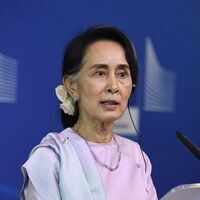
CHENG LI-WUN, the chairwoman of the Kuomintang (KMT), Taiwan's primary opposition party, made a historicvisitto the People's Republic of China.
This was the first such visit by a KMT chair in the past decade, and the meeting between Cheng Li-wun and Chinese PresidentXi Jinpingsuggested a potential diplomatic rapprochement.
China announced a set of tenincentivemeasures for Taiwan as an attempt to revive the bilateral relations andtranscendpolitical confrontation and mutual hostility. This includes the reinstatement of tourist visits from Shanghai and Fujian province to Taiwan,facilitationof food sales, easing inspection standards for food and fish and exchange of dramas between the two nations.
This cross-strait reconciliation, however, is not spurred by a domestic desire for reunification. The timing of this deepening convergence is juxtaposed with U.S. President Trumps drifting focus from the Indo-Pacific and Taiwan.
Australias identity crisis in Asia: Trust, fear and the politics of belongingAmid a fuel crisis, Australias carefully staged diplomacy in Asia reveals a deeper struggle with trust, identity and its place in the region.
Since his return to the Oval Office, Trump haslimitedhis reliance on theQuadas the predominant security arrangement to counter China in the Indo-Pacific, prioritisingtariffsand export control regime for advanced chips.
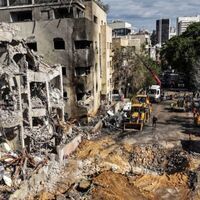
The American indifference towards its Indo-Pacific allies became evident during the U.S.-Israel conflict regarding Iran. The U.S.transferredits Terminal High Altitude Area Defence (THAAD) system from the Korean Peninsula to the Middle East to compensate for the depleted batteries and interceptors. It alsodeployedthousands of marines along with the USS Tripoli, an amphibious assault ship stationed in Japan, to the Middle East.
This force posture diversion exacerbates the securityconcernsof the American Indo-Pacific allies, including Japan, South Korea and Taiwan. The waning U.S. security umbrella implies that these Indo-Pacific allies canno longer relyon American security assurances. The vulnerability of American extended deterrence was further exposed when the U.S. conclusively failed to safeguard its Gulf allies against Iranian drone and missile assaults.
Trumps strategic priorities compel its Indo-Pacific allies toreorienttheir strategic direction. The unreliability of the American security assurances has forced the Quad members to seek strategic autonomy, as evidenced by growing strategic ties between Japan and Australia. Both nations signed a US$7 billion (AU$9.7 billion) warshipsdealamidst growing security concerns. Under this agreement, three stealth frigates will be built in Japan and eight in Western Australia.
The upcomingvisitof Japanese PMSanae Takaichito Australia will further strengthen intra-Quad security and economic ties while alleviating reliance on the U.S. This indicates evolving Indo-Pacific alliances and priorities without overtly relying on American security assurances.
The uncertainty of American extended deterrence and its role as a strategic protector is also prompting a strategic recalibration in Taiwan. The Taiwanese politicians are becoming increasingly sceptical of American assurances. They perceive the Americanviewof Taiwan as analogous to Ukraine in the Indo-Pacific, where the U.S. continues to supplyweaponsworth billions of dollars, propelling its military industrial complex, while fuelingdiscrepanciesbetween Taiwan and the PRC.
Wongs world: Diplomacy under the shadow of AmericaPenny Wongs cautious diplomacy reveals Australias struggle to balance loyalty to the U.S. with the need for genuine independence on the world stage.
The Taiwanese leaders are realising that, much akin to Ukraine, the American elite will forget their woes in a few years, leaving them at the mercy of China. The hoax of the American strategic umbrella is becoming evident through President Trumpsindifferencetowards his Indo-Pacific partners, especially Taiwan.
President Trump has demanded that Taiwanpaythe U.S. for defending it against China. In reality, the U.S. does not have any military presence on the island and cannot actively defend the country in case of a Chinese onslaught.
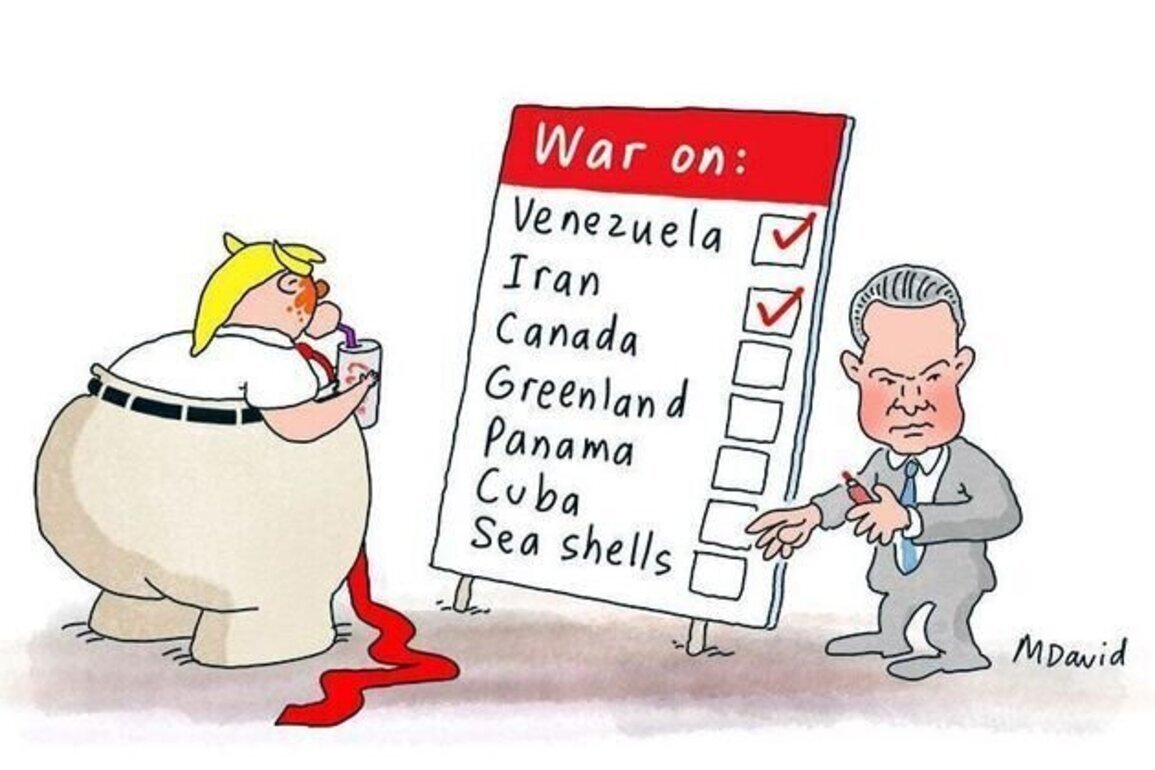
President Trump signalled strategic detachment from Taiwan afterOperation Absolute Resolvein Venezuela. President Trump asserted that, though the U.S. operation in Venezuela does not provide China a precedent, it isup to President Xihow he deals with Taiwan. President Trumps America First approach gives the least importance to protecting Taiwanese sovereignty.
The visit of the Kuomintangs chair to the People's Republic of China demonstrates that Taiwanrecognisesshifting American priorities and no longer takes American security assurances for granted. Taiwan's rapprochement with the PRC extends beyond conventional hedging; it signifies a transformation in regional alliances and exemplifies adaptive realism. It is not solely a political alignment but manifests Taiwan's strategic necessity to transcend thedeceptionof the U.S. military protection.
The persisting American indifference towards its Indo-Pacific allies, including Taiwan, broadens the strategic space for China, allowing the CCP to extend its influence in the region. Themeetingbetween President Xi and Vietnam's communist chiefTo Lm, right after the Xi-Wun meeting, indicates Chinas capitalisation of the strategic vacuum in the Indo-Pacific.
China appears to be gaining ground in the region, placing it in a betterpositionfor the upcoming Xi-Trump Summit. The PRC will utilise these gains and push for a more lucrative deal, thus consolidating its grip on the region. The drifting American focus in the Indo-Pacific has led to the abandonment of the American allies, forcing them to collaborate among themselves or seek reconciliation with their arch-nemesis China.
Hamza Zamanis an Assistant Research Associate at the Islamabad Policy Research Institute, Pakistan.
Related Articles
- When Trump met Rudd: The strategy of silence and showmanship
- In defence of diplomacy: A path to Australian independence