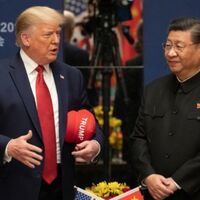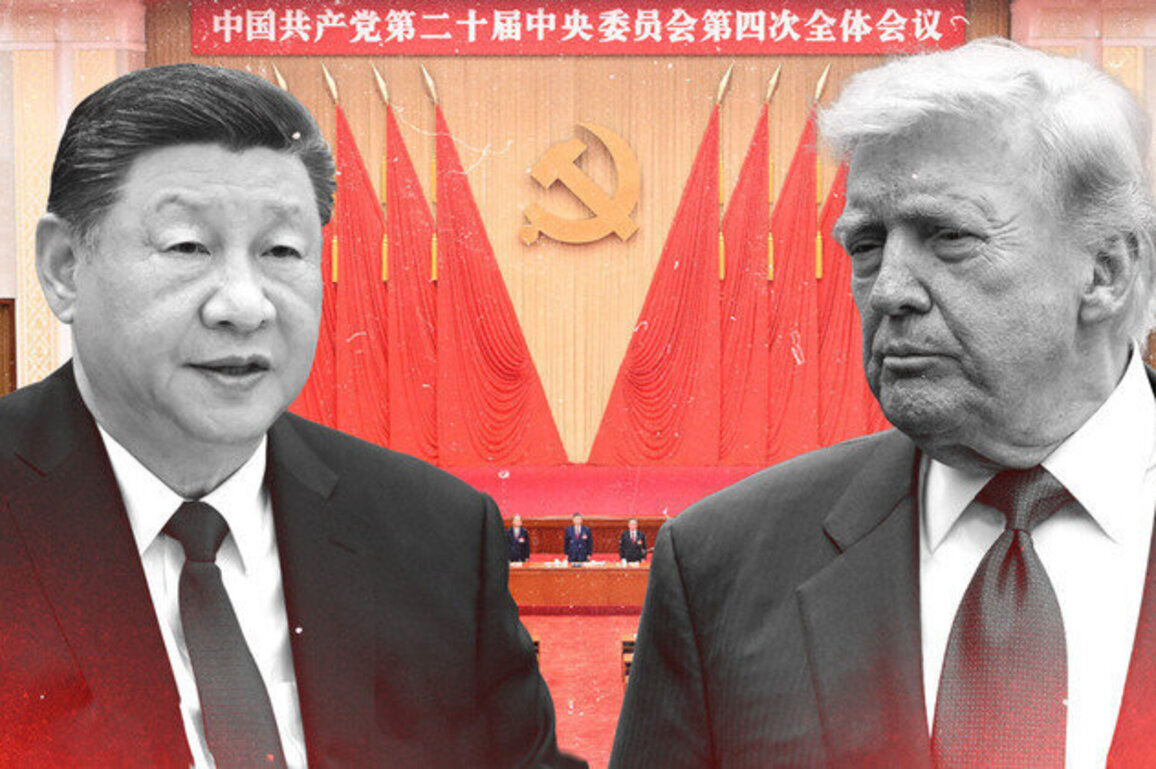
During his first term in office, US PresidentDonald Trumpwas personally welcomed with great pompwithin the walls of Beijings Forbidden Cityby his Chinese counterpartXi Jinping. The Chinese president even invited him to dine in the heart of the vast palace complex, long the seat of Chinas imperial power.
Trump is in fora different welcome this year. It's not yet clear whether the US presidents long-awaited return toBeijingfor a two-day summit on Thursday and Fridaywill be accompanied by the lavish ceremony of his first visit nine years ago.
At a tipping point
The relationship between the two great powers has only grown more tense since 2017. Thelist of topics on the tableincludesIran, oil prices,tariffs,trade war,Taiwan, the shock of the AI revolution and a deepening technological rivalry. On each of these points, both leaders will be trying to advance their own states interests often at the others expense.
The balance of power between the two presidents has shifted over the past nine years. Back then, Xi was quick to draw on the Middle Kingdoms past glories to awe his American guest. This time, the theme of future dominance, not ancient majesty, has filled domestic and international headlines,the New York Times wrote on Tuesday.
This is looking like it's going to be one of the most lopsided summits of this type in a very long time, mainly because US power, both domestically and internationally, has faded quite a bit over the past year, said Marc Lanteigne, a China specialist at the Arctic University of Norway.
I think that there is a very strong chance that this meeting will be seen as the tipping point, if you will.
Watch moreWhose art of the deal? Trump and Xi to meet in Beijing
On the eve of the summit, the Chinese president seems to be the one holding all the cards. The trade war that Trump tried to (re)launch at the beginning of his second term by slapping 145 percent tariffs on Chinese imports quickly sputtered out after Beijing forced Trump to reduce tariffs to 30 percent by announcing sweeping restrictions on exports ofrare earthscrucial for producing technology ranging from smartphones to electric vehicle batteries.
This stand-off showed Beijing just how reliant the US has grown on these critical minerals, said Patrick Nicchiarelli, a China specialist at the International Team for the Study of Security (ITSS) Verona.
This Chinese stranglehold on the industry gives them leverage over everyone, including Washington, he said.
Theres no doubt that this showdown over rare earth exports has cast a cold shadow over the talks between Trump and Xi, despite Washington's efforts toexpand agreements with other countriesthat possess these resources in order to reduce their dependence, Nicchiarelli said.
The limits of hard power
Moreover, the US seems to haveshot itself squarely in the footwith its war on Iran and the resulting conflict unfolding across the Middle East.
The recent conflicts have significantly depleted weapons stockpiles, which need to be replenished, Nicchiarelli said. Unfortunately for Washington, modern weaponry also requires rare earth elements.
Trump would have actually preferred to meet with Xi under better circumstances, Lanteigne said, notably with the Iran conflict firmly in the past.
Originally slated for March, the summit was delayed by Washington following the start of the joint US-Israeli war against Iran.
Right now, Washingtons influence looks weakened by the Iran conflict and the related global energy instability, and tensions with Western allies, said Zeno Leoni, a specialist in US-China relations at Kings College London. China, despite its own economic slowdown and internal problems, benefits from appearing comparatively steady and patient.
Watch moreTrump and Xi play nice ahead of US-China summit
More broadly, the aggressive foreign policy of the Trump administration including the seizure of Venezuelan PresidentNicolas Maduro, threats to annexGreenlandand criticism of theNATOmilitary alliance has, by contrast, bolstered Chinas image in many countries, mainly across Asia. Xi now looks likethe responsible adultin the talks, more dependable than his erratic US counterpart.
Which is ironic, given that in the past, people tended to look to the United States to act as the worlds policeman, Nicchiarelli said.
But Trump still has cards to play.
The United States still has unmatched military reach and enormous financial leverage, so in raw power terms it remains stronger, Leoni said.
CEOs to the rescue
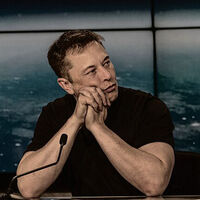
The US president is expected to push Beijing to open its markets to more US trade. He will be accompaniedby a dozen CEOs of major US corporations, including Elon Musk ofTeslaandSpaceX, Apples Tim Cook,MetachiefMark Zuckerbergand the heads ofBoeingandGoldman Sachs. The message is hard to miss.
Even though there's been all kinds of discussion about the reform of the Chinese economy, China still needs the American market at least in the short term, Lanteigne said.
It remains to be seen if the two leaders are actually going to play the aces theyve got stuffed up their sleeves.
For the United States, salvation lies in the economy. With a deeply unpopular war in the Middle East and Americans struggling with rising cost of living, Donald Trump needs to burnish his image and is hoping to be able to show off trade agreements signed with Xi Jinping, Nicchiarelli said.
It is an ambition that seems all the more urgent with the rapid approach of the November midterm elections.
The US president will likely also try to convince China to put pressure on Tehran to reopen the largely blockedStrait of Hormuzespecially considering that Beijing remains the main destination for Irans oil exports.
But the key question will be just how far China will try to press its advantage. The real tell of whether China will gain the upper hand will be how it handles the question of Taiwan.
China is obviously not happy with ongoing American weapons sales to Taiwan, Lanteigne said. China would ideally like to have some kind of veto power or some kind of influence over future US arms sales.
But Xi could go even further, potentially negotiating a semantic shift that would have major consequences on the future of cross-strait relations.
If he can convince Washington to abandon its longtime ambiguous stance on Taiwanese independence and shift to stating that it opposes independence outright, then the Chinese president will have played his trump card and, whats more, he will have won the pot.
This article has been translated fromthe original in French.
Originally published on France24