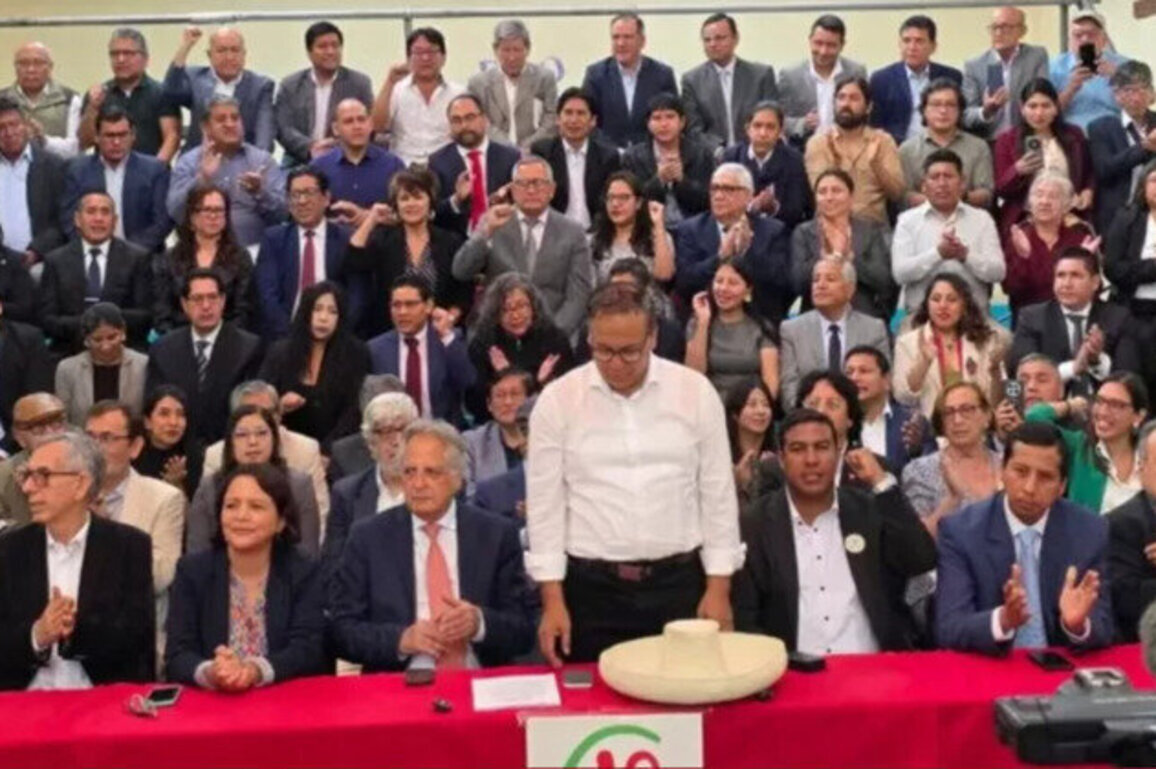
A New Roadmap? The leading candidate of Juntos por el Per (JP), Roberto Snchez, presented a new Government Planthis time the result of a consensus reached with the political parties Ahora Nacin, Partido Cvico Obras, Primero la Gente, and Alianza Electoral Venceremos, which have pledged to support him in this runoff election. In this context, will the commitments made by JP to grassroots organizations be upheld?
Following the recent runoff debate between presidential candidates Keiko Fujimori and Roberto Snchezin which the public deemed the latter the winnerthe Together for Peru (JP) party received support from various parties that had been rivals in the first round. This uniting of forces is a significant effort, following the political fragmentation the country has experienced.
However, while the update to JPs Government Plan includes important steps toward moderating ideological language and setting measurable goals, it must not overlook the main demands of the public that were agreed upon in the signing of a Commitment for Peru. These include restoring the balance of powers, repealing the so-called pro-crime laws, justice and reparations for victims of protests over the past decade, among others; and it was signed by more than 30 grassroots organizations.
New Plan 20262031: Measurable Goals
In the economic sector, thenew planno longer mentions the renegotiation of treaties and state control and commits to boosting micro and small enterprises, industrialization, reducing gasoline prices, and raising the minimum living wage to 1,500 soles. In the Democratic Reform pillar, constitutional change is no longer central but rather part of other reforms in justice and anti-corruption.
In the Health sector, the goal of 8% of GDP for that sector is no longer mentioned, and the plan commits to 95% of the population having access to essential services; in the Education sector: the goal of 6% of GDP for education is maintained, and the plan includes 100% of rural schools and basic services and 90% of adolescents graduating.
In the Decentralization pillar, the plan increases the share of GDP allocated to regions outside Lima and Callao by 10 percentage points; while in the Security pillar: it reaffirms the commitment made to civil society, political parties, and the Citizen Platform regarding the repeal of pro-crime laws, justice and reparations for victims of protests, economic policy in harmony with nature, and the defense of quality public education, among others.
Peru already had a roadmap. In 2011, former President Ollanta Humala ran for president with his Great Transformation plan, but then in the runoff election he modified his plan into the Roadmap, which retained some initial milestones but fit better into the market economy model.
The current situation in Peru is similar in many ways; however, the context of public insecurity (driven by pro-crime laws and a lack of institutional framework, in addition to widespread corruption at all levels of government) demands a firm commitment from the next president to undertake the necessary reforms. Meanwhile, the public today faces the crucial task of casting a critical vote at the polls and actively participating in the nations development.
Redaccin Per